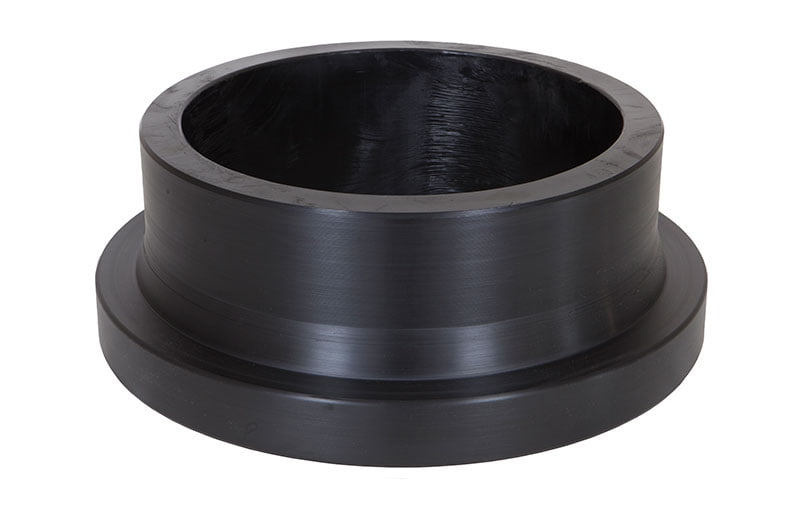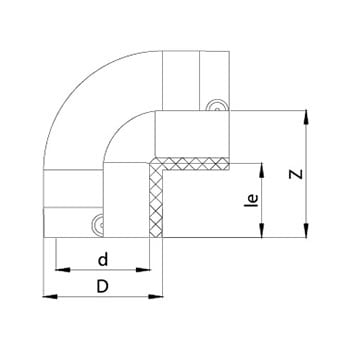
Polyethylene fittings are parts that connect polyethylene (PE/HDPE) pipes to each other, to valves, or to pipes made of different materials; they change the direction, diameter, or distribution of the line. Couplings, elbows, tees, reducers, caps, saddles, flange adapters, and metal transitions are the most commonly used members of this group.
A pipeline generally fails more often at the joints than in the pipe itself. Therefore, the raw material, pressure class, and connection method of the fitting should be selected as carefully as the pipe itself. A correctly selected polyethylene fitting is welded to the pipe like a single piece and remains leak-tight throughout the service life of the line.
In this guide, you will find polyethylene fitting types, connection methods, PE100 and SDR selection, and the most common mistakes made in the field all together.
Polyethylene, HDPE, and PE100: what is the difference?
In the field, “polyethylene fitting,” “PE fitting,” and “HDPE fitting” are used for the same product group. HDPE means high-density polyethylene; this is the polyethylene used in pressurized water, natural gas, and infrastructure lines.
Polyethylene raw material is named according to its strength class:
- PE80: Minimum strength (MRS) 8 MPa. It is more commonly encountered in older networks and low-pressure lines.
- PE100: Minimum strength 10 MPa. A thinner wall thickness is sufficient for the same pressure; today this is the standard choice in water and gas projects.
- PE100+ (HDPE100+): This is the class of PE100 raw material that has passed additional tests against slow crack growth and long-term pressure. Fortiweld fittings are manufactured from HDPE100+ raw material.
SDR and pressure class (PN)
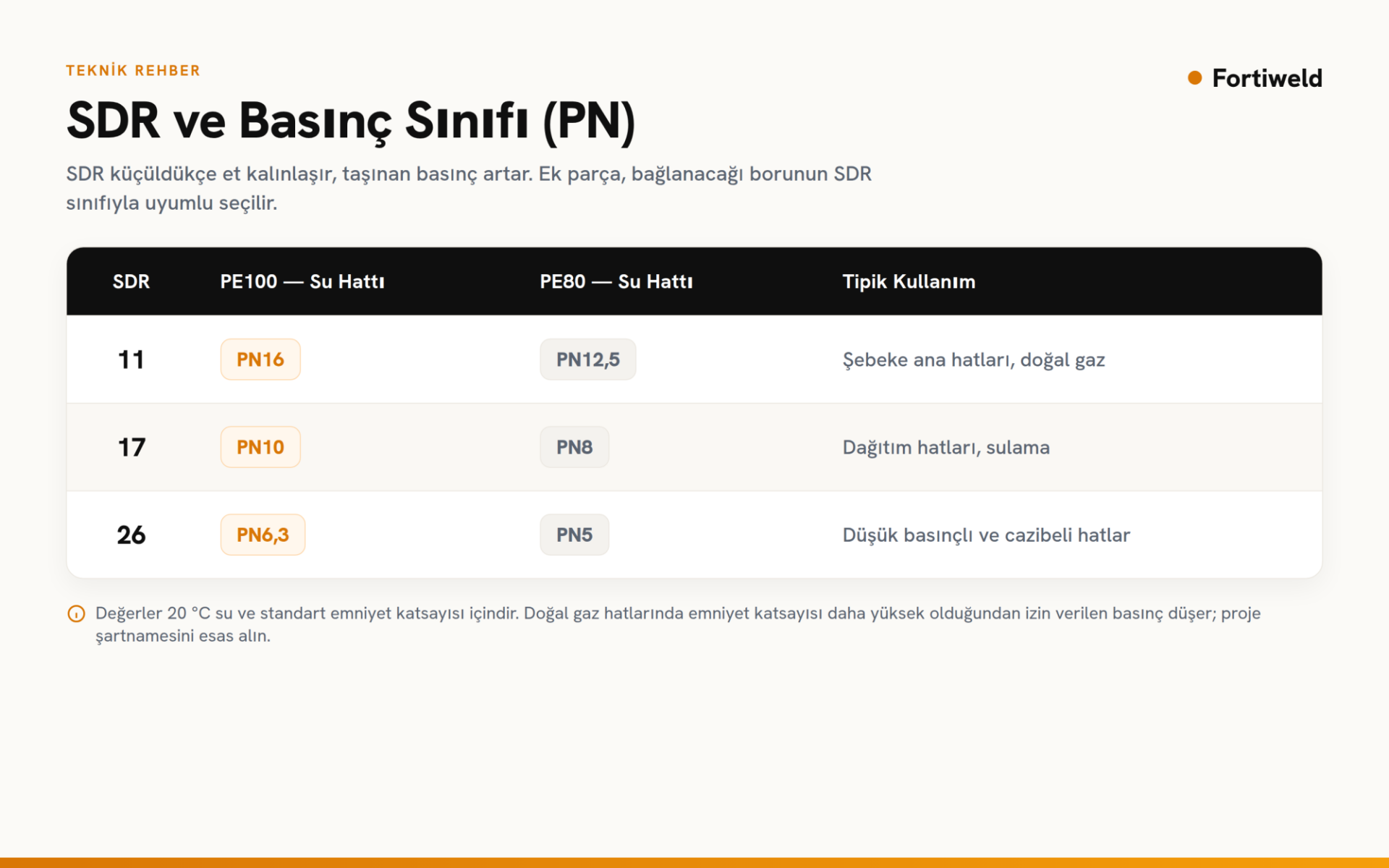
SDR is the ratio of the pipe's outside diameter to its wall thickness. As SDR decreases, the wall becomes thicker and the pressure the pipe can withstand increases. The fitting should be selected to be compatible with the SDR class of the pipe it will be connected to.
| SDR | Pressure in water line with PE100 | Pressure in water line with PE80 | Typical use |
|---|---|---|---|
| SDR 11 | PN16 | PN12,5 | Main network lines, natural gas |
| SDR 17 | PN10 | PN8 | Distribution lines, irrigation |
| SDR 26 | PN6.3 | PN5 | Low-pressure and gravity lines |
The values in the table are for water at 20 °C and the standard safety factor. Since a higher safety factor is used in natural gas lines, the allowable pressure is lower; use the value specified in the project specification.
Polyethylene fitting connection methods
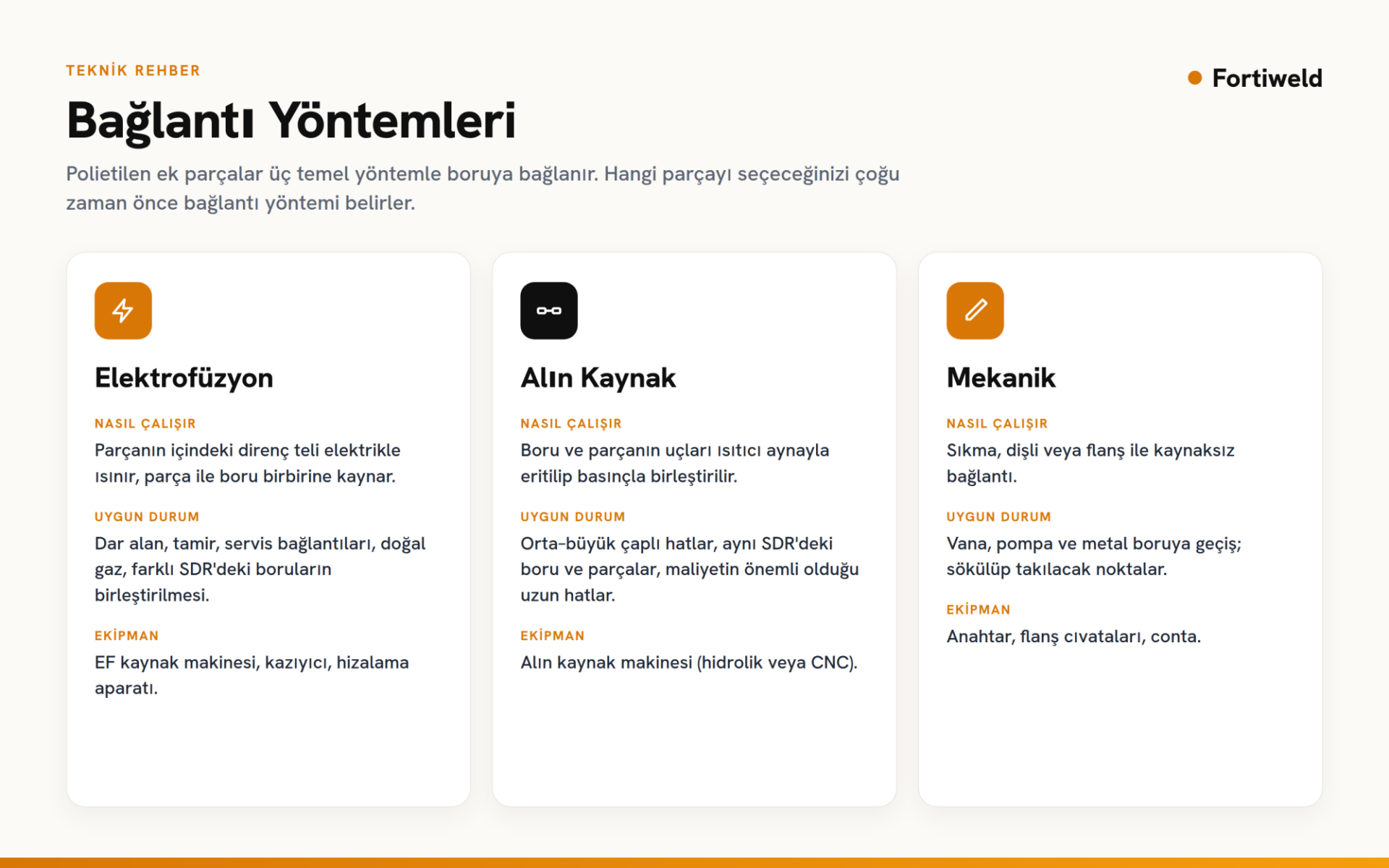
Polyethylene fittings are connected to the pipe using three basic methods. In many cases, the connection method determines which fitting you should choose first.
| Method | How it works | Suitable applications | Required equipment |
|---|---|---|---|
| Electrofusion (EF) | The resistance wire inside the fitting is heated electrically, welding the fitting and the pipe together | Confined spaces, repairs and service connections, natural gas lines, joining pipes of different SDRs | Electrofusion welding machine, scraper, alignment tool |
| Butt fusion | The ends of the pipe and fitting are melted with a heating plate and joined under pressure | Medium and large diameter lines, pipes and fittings of the same SDR, long lines where cost is important | Butt welding machine (hydraulic or CNC) |
| Mechanical | Non-welded connection by compression, threaded, or flange | Transition to valves, pumps, and metal pipes; points that will be disassembled and reassembled | Wrench, flange bolts, gasket |
Practical rule: In small diameters and difficult conditions, electofusion is preferred; in large diameters and long lines, butt fusion; and for transitions to different materials, flanges or metal transitions are preferred. All three can be used together in the same project.
In welded connections, recording the welding parameters ensures traceability of the joint. For this purpose, a welding data logger is used.
Polyethylene fitting types
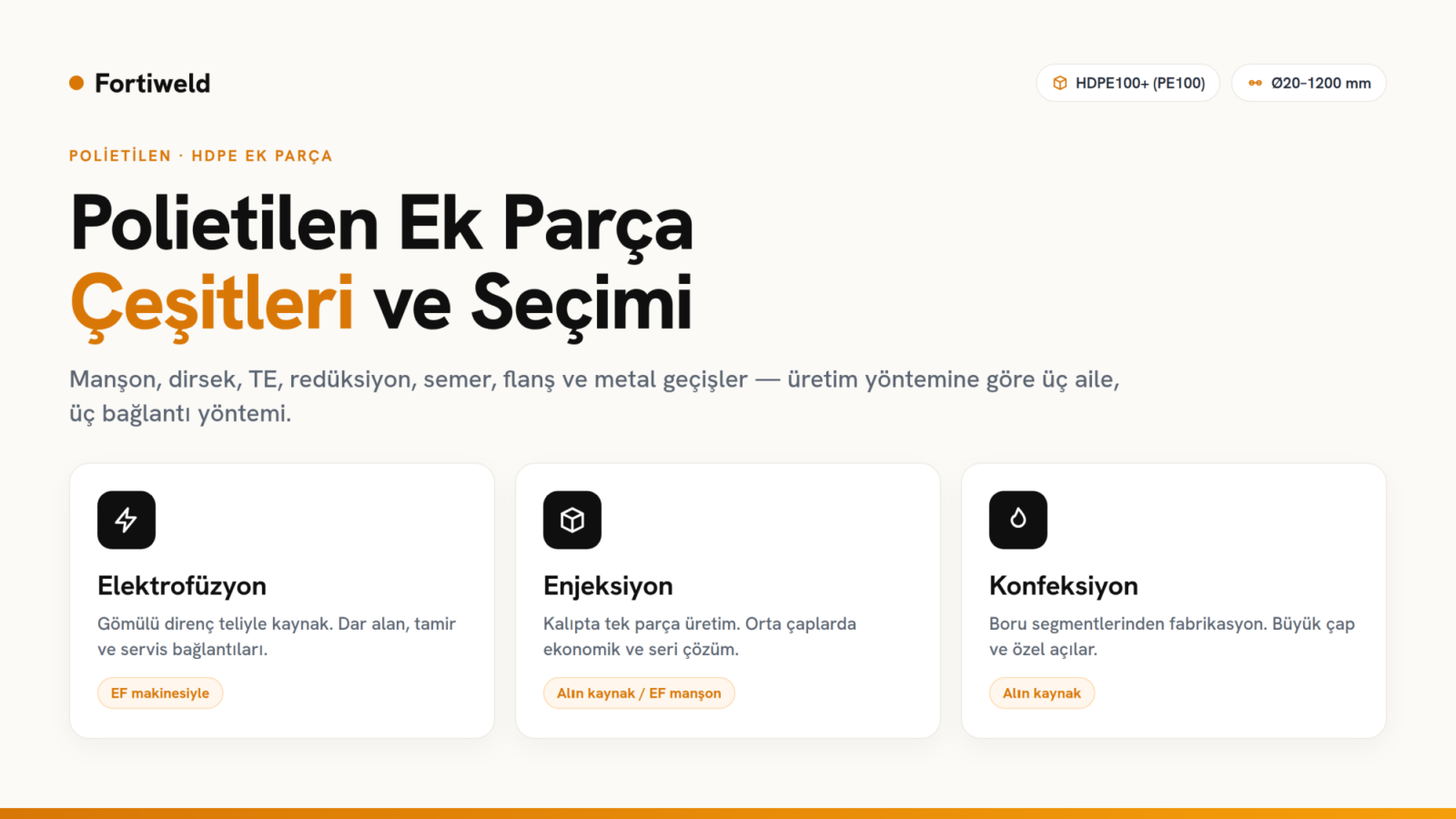
Polyethylene fittings are divided into three families according to their production method. A part serving the same function, for example a 90° elbow, can be found in all three families; the difference between them is the connection method and diameter range.
Electrofusion (EF) fittings
These are parts with embedded resistance wire inside, welded with an electrofusion machine. They are the most practical solution in places where rotating or aligning the pipe is difficult and in repair work.
- EF coupling: Joins two pipes in a straight line. It is the most commonly used part in fault repair.
- EF elbow (90°, 45°): Changes the direction of the line.
- EF tee (equal, unequal): Provides a branch outlet from the line with the same or smaller diameter.
- EF reducer: Connects two pipes of different diameters.
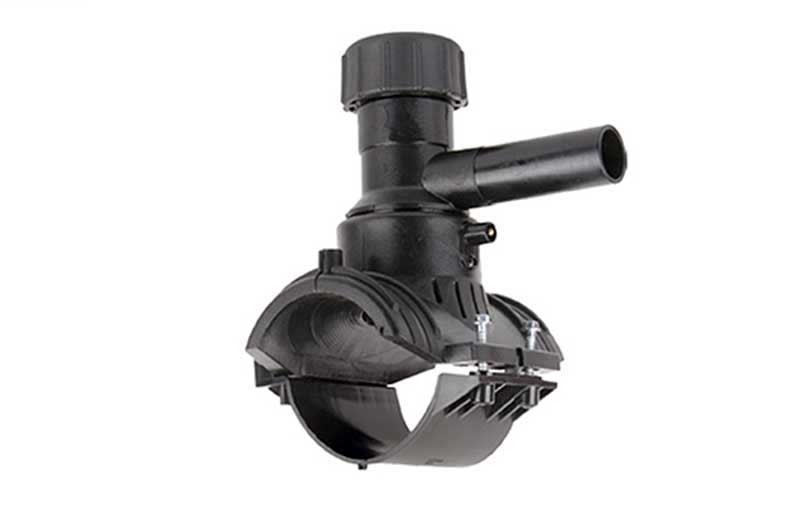
- EF saddle and service tee (standard, 360°, valved): Building and subscriber connections are made without shutting off the main line, often while the line is under pressure.
- EF end cap: Closes the end of the line.
All products: HDPE Electrofusion Fittings
Injection (spigot) fittings
Manufactured as a single piece by injection molding. Their ends have the same diameter and wall thickness as the pipe; they are connected by butt welding or with an EF coupler. Since they are mass-produced, they are an economical option for medium diameters.
- Elbow (90°, 45°), tee (equal, reducing, cross, 45° lateral), reducer (standard, short type, short stepped), end cap and flange adapter
All products: HDPE Injection Fittings
Fabricated (manufactured) fittings
Manufactured by cutting pipe segments and joining them by butt welding. Used for large diameters that cannot be mold-produced and for non-standard angles.
- Elbow (11°–30°, 45°, 60°, 90°), tee (equal, reducing, cross, reducing cross, 45° lateral) and concrete transition adapter
All products: HDPE Fabricated (Segmented) Fittings
Flanges and metal transitions
To connect the polyethylene line to a valve, pump, meter, or steel pipe, a loose steel flange is used together with a flange adapter. Welded or threaded metal transitions connect the PE line directly to the metal installation.
- Flanges: steel, PP-coated steel, and blind flange (PN10/PN16)
- Metal transitions: weld-end, female threaded, and male threaded transitions
Article in which we explain adapter and flange selection in detail: HDPE Adapter Selection Guide
Which family should you choose?
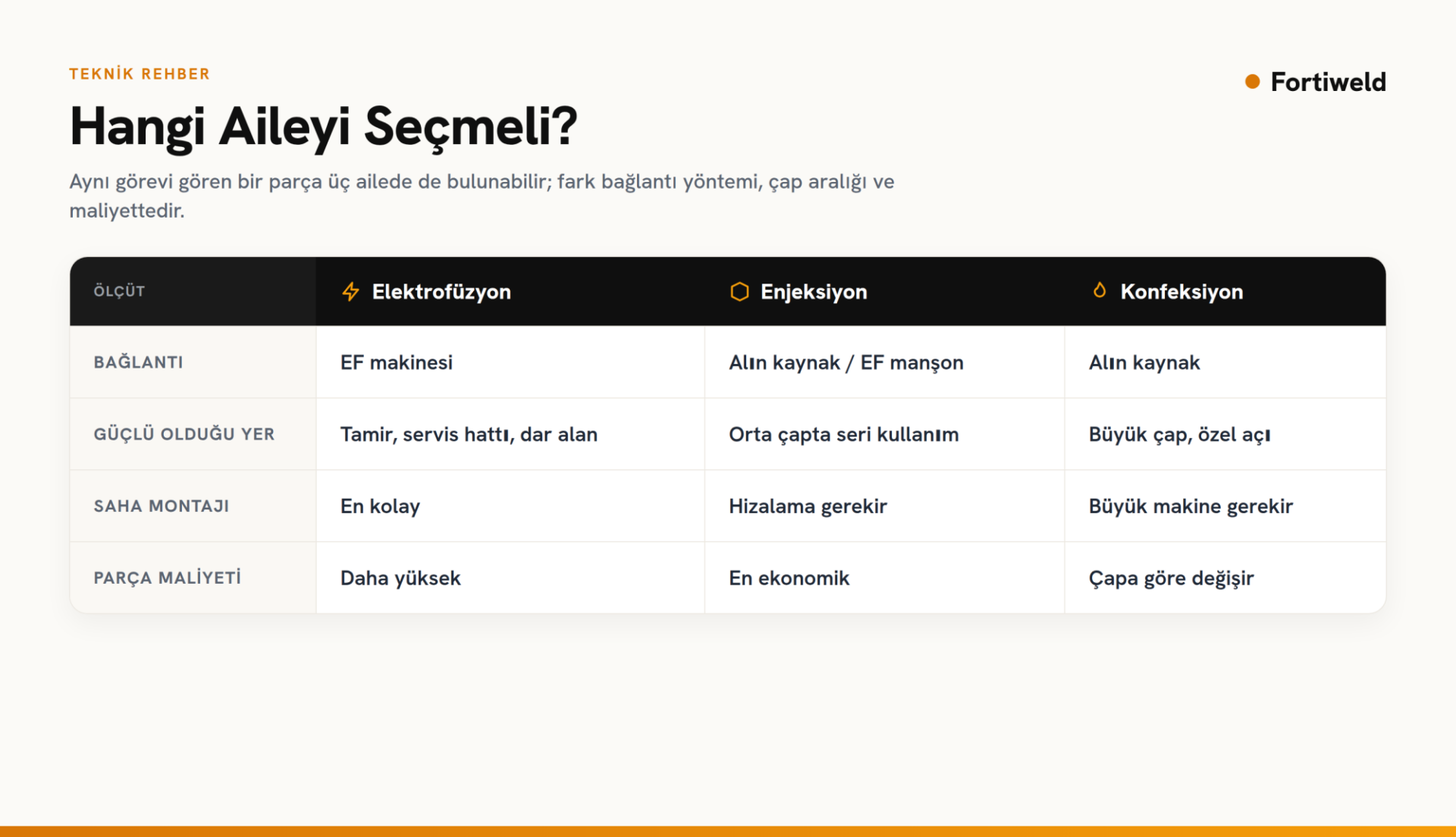
| Criterion | Electrofusion | Injection | Fabricated |
|---|---|---|---|
| Connection | EF machine | Butt fusion or EF coupler | Butt fusion |
| Best suited for | Repair, service line, confined spaces | Series use in medium diameters | Large diameter, special angle |
| Field installation | Easiest | Alignment required | Alignment and large machine required |
| Cost per fitting | Higher | Most economical | Varies by diameter |
The Fortiweld fitting range covers Ø20–Ø1200 mm. The manufactured diameters of each fitting are listed on the product page.
Where are polyethylene fittings used?
Polyethylene does not corrode, is flexible, and forms a monolithic pipeline when welded. These properties make it the main material for underground pressurized lines.
| Area | Featured fittings | Point to consider |
|---|---|---|
| Drinking water networks | Coupler, tee, reducer, service tee, flange adapter | Certificate of suitability for drinking water and the correct PN class |
| Natural gas distribution | EF coupling, EF saddle, service tee, EF end cap | Traceable (barcoded) EF fittings and recorded welding suitable for gas lines |
| Irrigation lines | Injection elbow and tee, reducer | Cost on long lines; if low SDR is unnecessary, SDR 17 may be sufficient |
| Wastewater and stormwater | Fabricated elbow and tee, concrete transition adapter | Large diameters and chimney/concrete structure transitions |
| Mining and industry | Large-diameter elbow and tee, flange, metal transition | Abrasive fluid, temperature and pressure fluctuations |
| Building and facility connections | Service tee, threaded metal transition, flange | Safe transition from PE line to metal installation |
Checklist when choosing polyethylene fittings
Clarifying the following eight items before placing an order largely eliminates the risk of incompatible parts and welding errors on site.
- Pipe diameter: The fitting is selected according to the pipe's outer diameter (for example Ø110 mm), not the inner diameter.
- Raw material class: If the pipe is PE100, the fitting should also be PE100 or PE100+.
- SDR and PN: The part's SDR/PN class must meet the line's operating pressure and the pipe's SDR.
- Fluid: Drinking water, natural gas, wastewater, or chemical; each requires different documentation and safety factors.
- Connection method and equipment: Will electrofusion or butt welding be done on site? Is the diameter range of your machine suitable for the part?
- Installation conditions: If there is a narrow trench, a repair point, or a pressurized line, electrofusion fittings stand out.
- Documentation and traceability: Manufacturer documents, raw material certificate, and welding barcode on EF fittings.
- Standard: Compliance with the standard required by the project specification. TS EN 12201 is generally required for drinking water lines, and the TS EN 1555 series for natural gas lines.
Most common mistakes made on site
- Not scraping the pipe surface before electrofusion; the oxidized layer is the most common reason for weld failure.
- Not fully inserting the pipe into the fitting and not using an alignment clamp.
- Moving or pressurizing the line after welding without waiting for the cooling time.
- Trying to join pipes and injection fittings with different SDRs by butt fusion.
Detailed explanation of these mistakes: 7 Common Mistakes in Electrofusion Welding
Frequently asked questions
Are polyethylene fittings and HDPE fittings the same thing?
Yes. HDPE means high-density polyethylene, and this is the polyethylene used in pressurized lines. In the field, “PE fitting”, “polyethylene fitting”, and “HDPE fitting” are used for the same products.
Can a PE80 fitting be connected to a PE100 pipe?
Although welding is technically possible, the pressure resistance of the line is determined according to the weakest part. In a PE100 line, it is recommended that the fitting also be PE100 or PE100+.
Should electrofusion or butt welding be preferred?
Electrofusion is more suitable for confined spaces, repairs, service connections, and natural gas lines; butt fusion is more suitable for medium and large diameter, long lines with the same SDR. In most projects, both are used together.
What is the difference between injection-molded and fabricated fittings?
The injection part is produced as a single piece in the mold and is economical in medium diameters. The fabricated part is made by joining pipe segments with butt welding; it is used in large diameters and at special angles.
How is a polyethylene line connected to a metal pipe?
With a flange adapter and loose steel flange, or with a weld-end or threaded metal transition piece. Flanged connection is preferred at valve and pump points that need to be disassembled and reassembled.
Can a new connection be made while the line is under pressure?
Yes. The electrofusion saddle or service tee is welded onto the main line, then the line is drilled with a special drilling tool. This allows a subscriber connection to be made without interrupting the water or gas supply.
What is the lifespan of polyethylene fittings?
PE100 pipes and fittings selected in the correct class and welded in accordance with the rules are dimensioned according to a 50-year design life for water at 20 °C. Actual service life depends on temperature, pressure, and welding quality.
Let’s choose the right polyethylene fitting for your project together
Selecting a polyethylene fitting comes down to four questions: pipe diameter and SDR, fluid and pressure, connection method on site, and project specification. If these four pieces of information are clear, the right fitting is also clear.
Fortiweld offers HDPE100+ electrofusion, injection, and fabricated fittings, flanges and metal transitions, and the electrofusion and butt fusion machines that weld them, all under one roof. Send your fitting list or project information, and our technical team will prepare the suitable fittings and a price quote.
For the most commonly used parts in pipelines, HDPE fitting also check out our guide.
For flange, threaded and metal transition options, HDPE adapter see our guide.