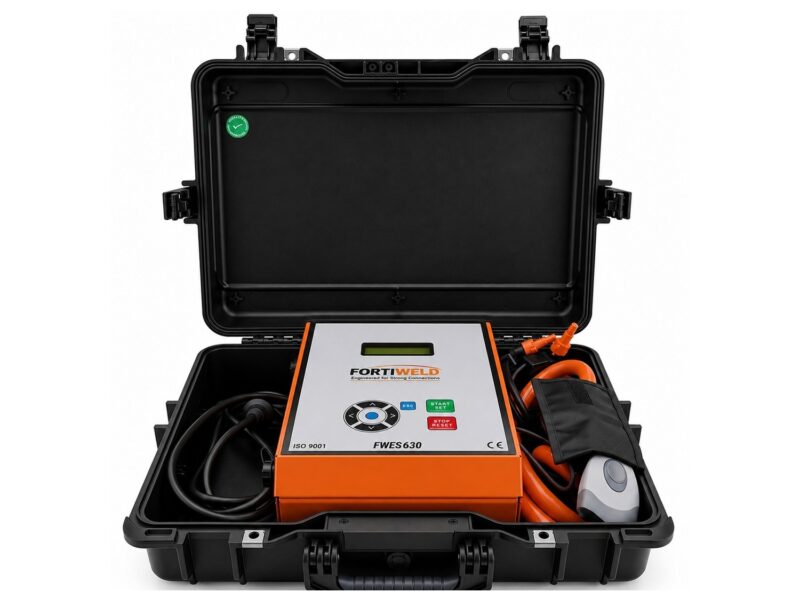
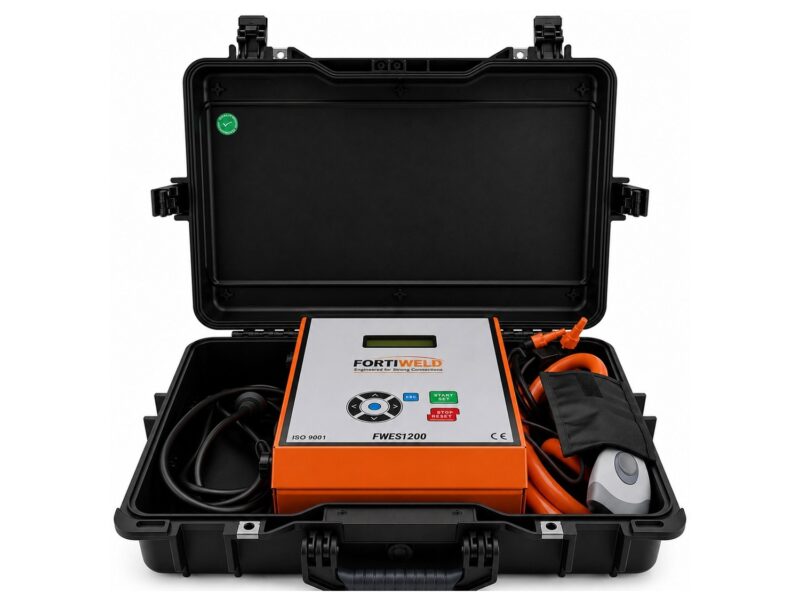
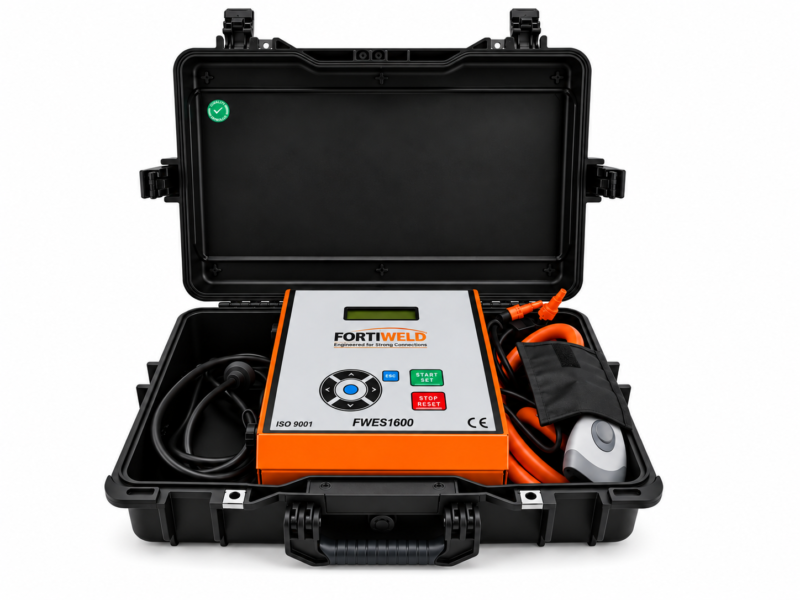
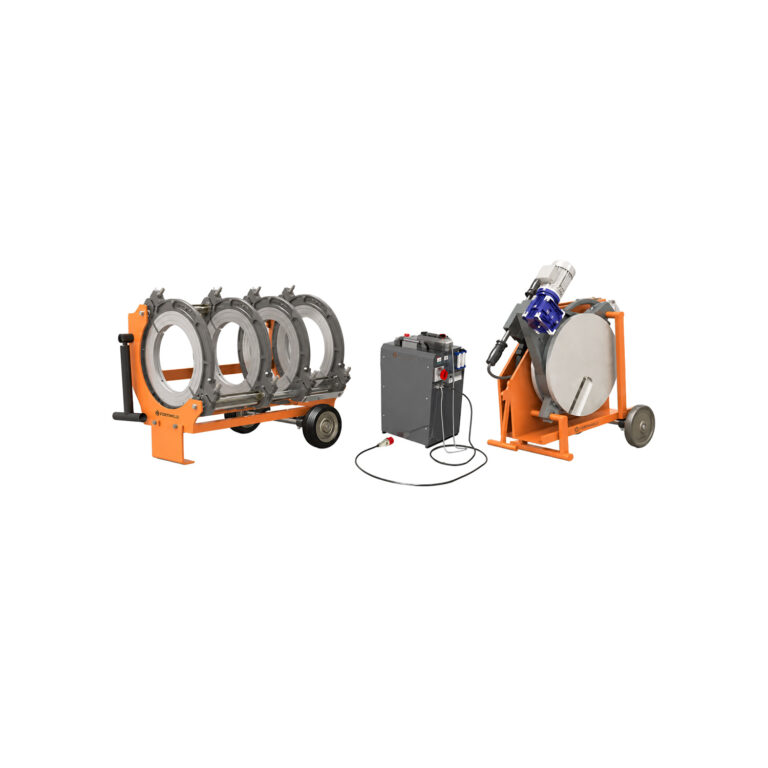
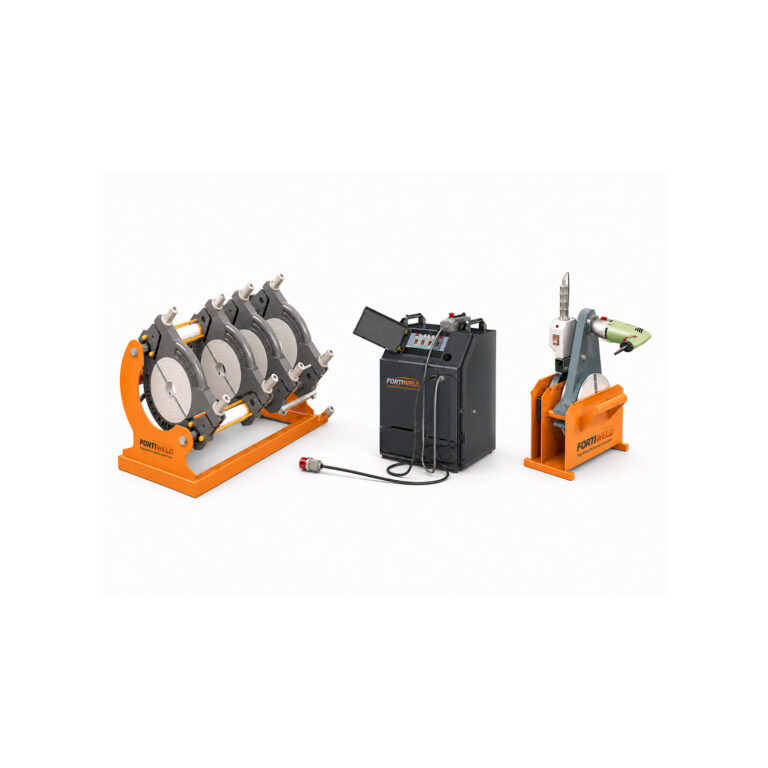
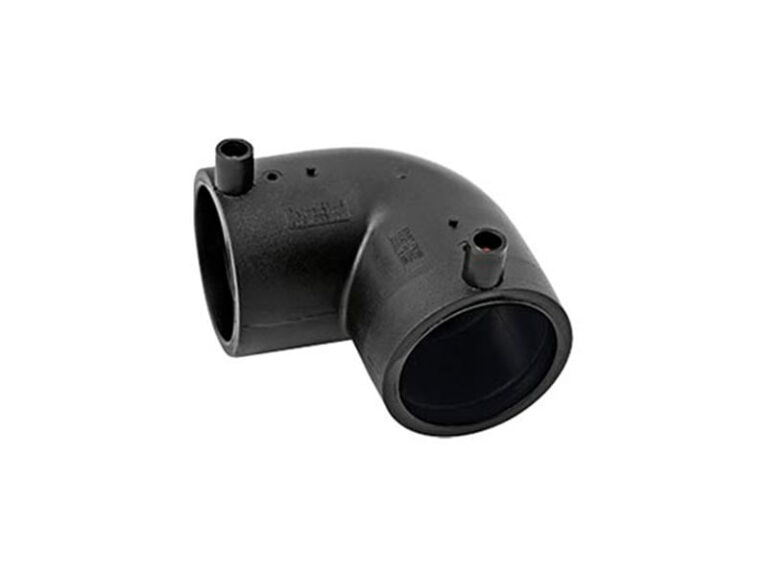
Electrofusion welding machines are electronic welding devices that enable high-density polyethylene (HDPE) pipes to be joined with the help of special fittings. Unlike butt welding, the pipes are not melted directly here; instead, an electrofusion fitting containing resistance wire is used. After the pipe is placed inside the fitting, the machine applies a controlled electric current to this wire. The wire heated by the current melts the surrounding polyethylene, and the pipe and fitting fuse together to form a permanent, leak-proof connection. The Fortiweld electrofusion series is designed to make this process reliable and repeatable.
How Does Electrofusion Welding Work?
The basis of the electrofusion principle is resistance heating. The resistance wire embedded in the inner surface of the fitting heats up when current passes through it and melts the polyethylene surfaces in contact. As the molten material cools, the pipe and fitting fuse together at the molecular level. Modern electrofusion machines usually determine the welding parameters required by each fitting (voltage and time) automatically by scanning a barcode; thus, the operator's need to enter values manually and the margin of error are reduced. The machine monitors the applied values throughout the welding process and provides feedback when the process is completed. One of the most critical stages for a correct result is preparation: scraping the pipe surface (removing the oxide layer), cleaning it, and aligning it correctly with the fitting directly determine the weld quality.
Advantages and Applications of Electrofusion
The electrofusion method stands out especially in situations where butt welding is difficult to apply:
- Narrow and confined spaces — ideal in trenches, inside buildings, and dense installation areas where large butt welding machines cannot fit.
- Repair and maintenance work — practical for adding a connection, elbow, tee, or electrofusion coupler to an existing line.
- Different geometries — the variety of fittings provides an advantage in non-straight, non-end-to-end joints such as elbows, reducers, and valve connections.
- Speed in the field — when proper preparation is done, it offers fast and reliable connections in small diameters.
This method is widely used in many areas such as natural gas distribution lines, drinking water networks, infrastructure repairs, and industrial piping systems.
Model Range
Fortiweld FWE series electrofusion welding machines offer options suitable for different diameter ranges and work volumes:
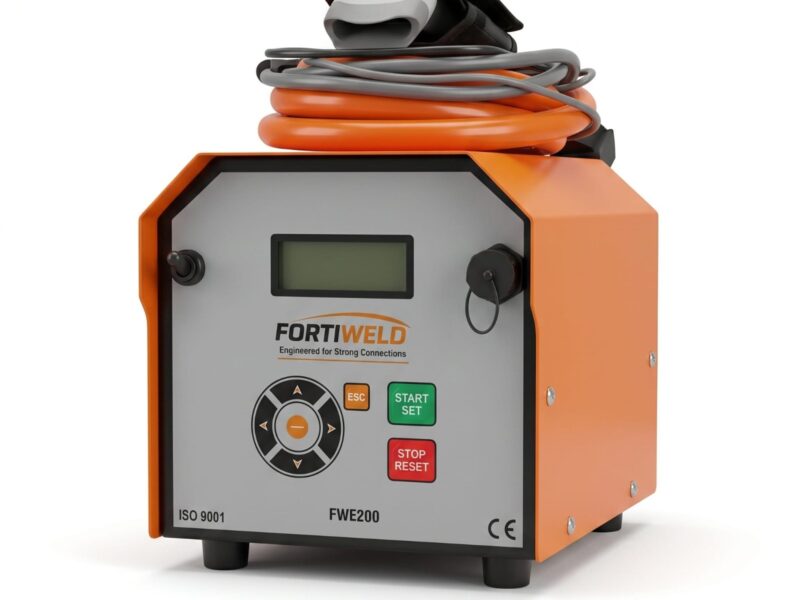
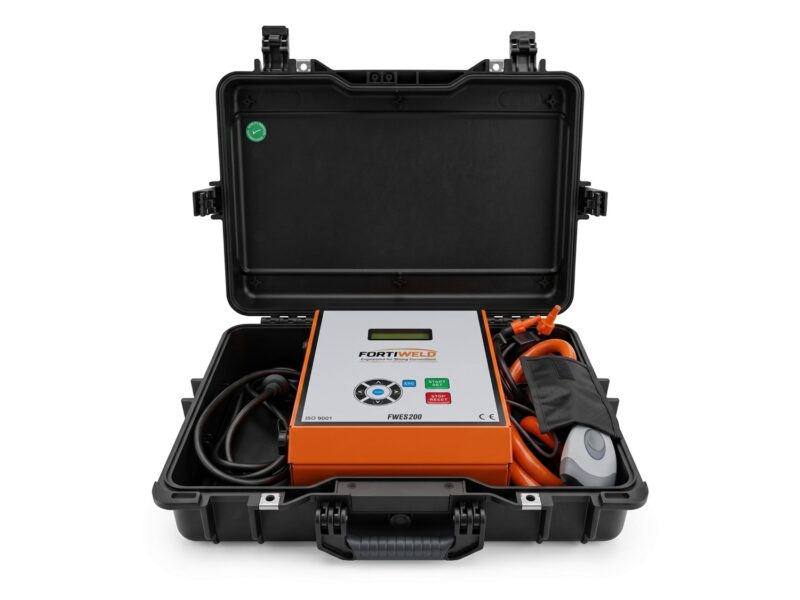
- FWE 200 — compact, portable solution for small-diameter pipes and common installation jobs.
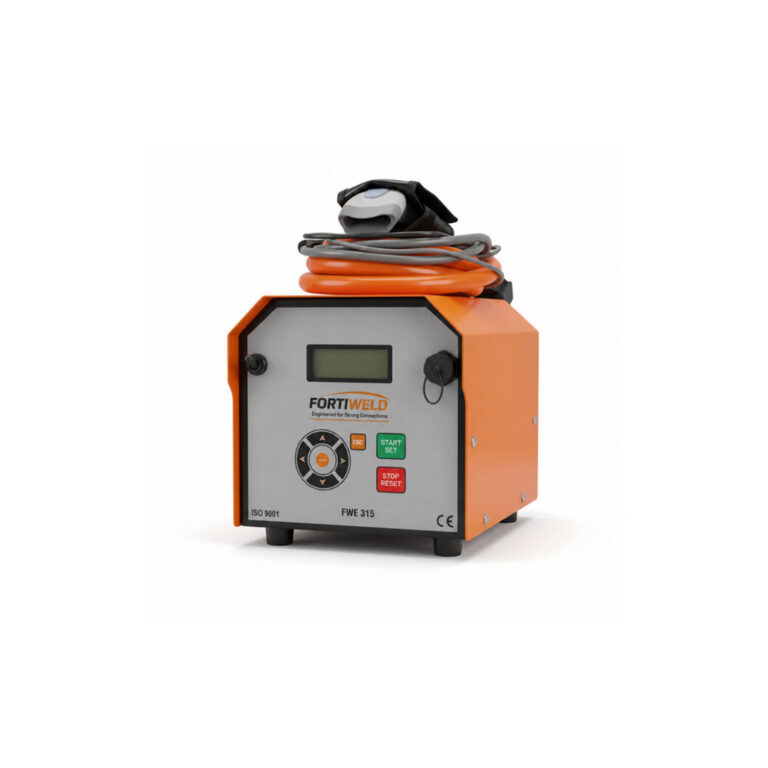
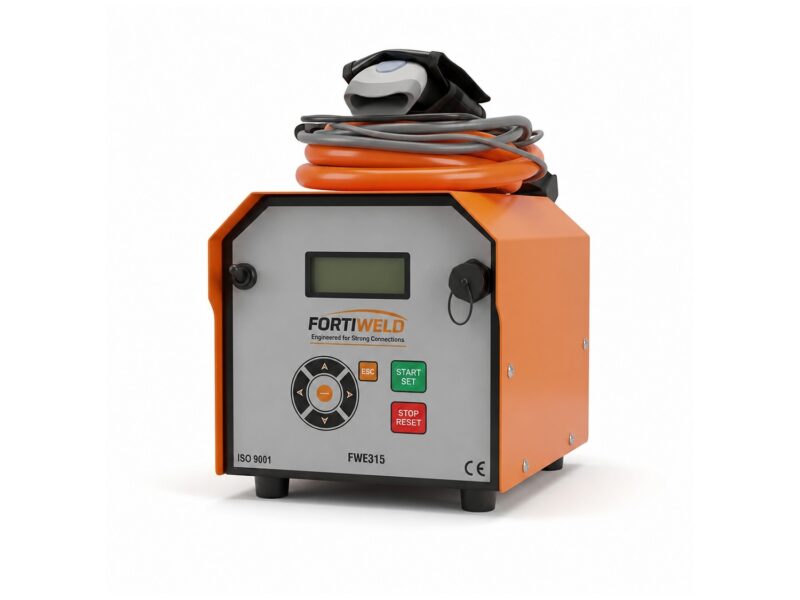
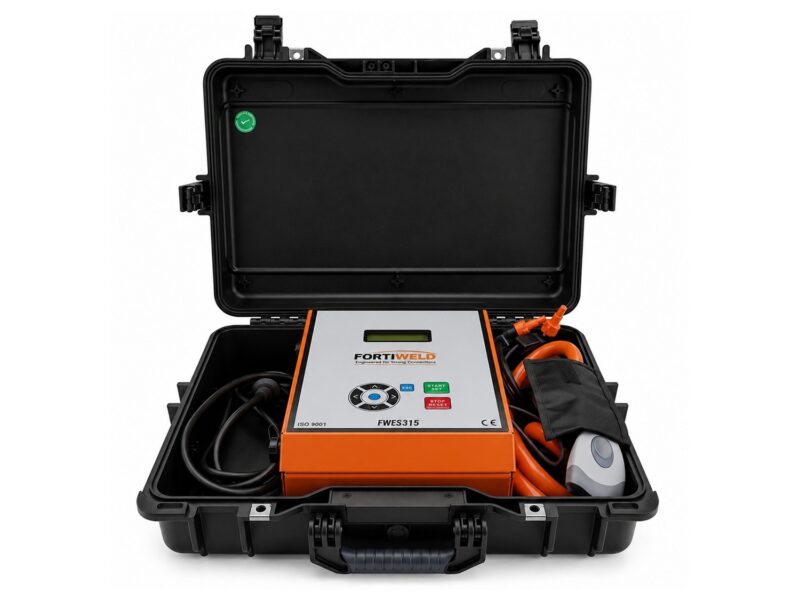
- FWE 315 — a widely used model offering balanced capacity in the medium diameter range.
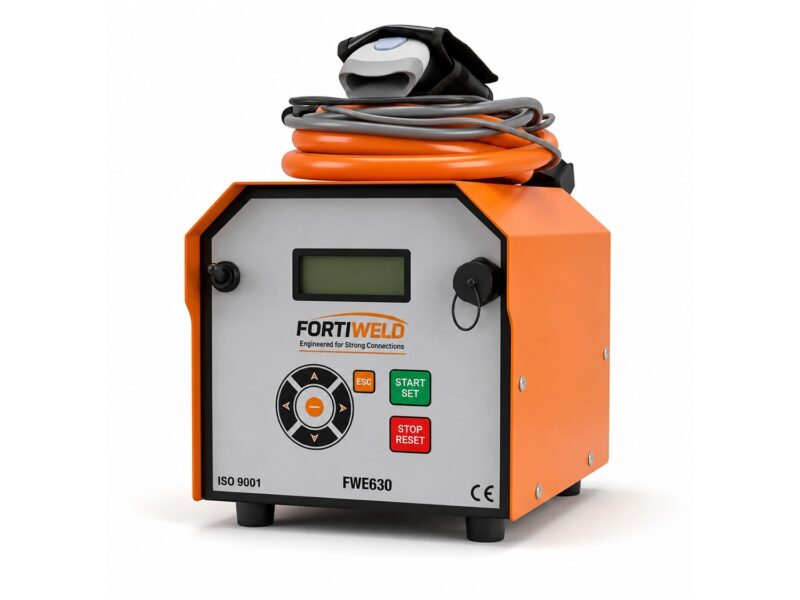
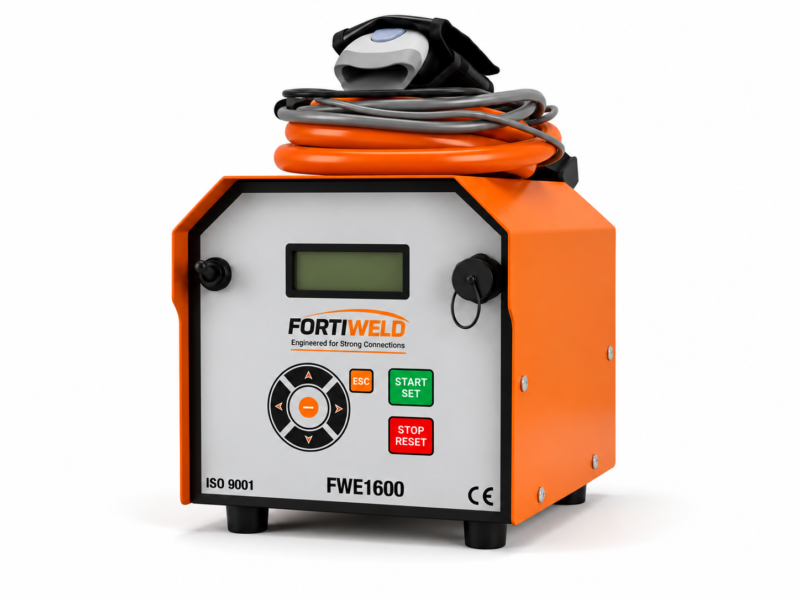
- FWE 630 — high capacity for larger-diameter pipes and intensive field use.
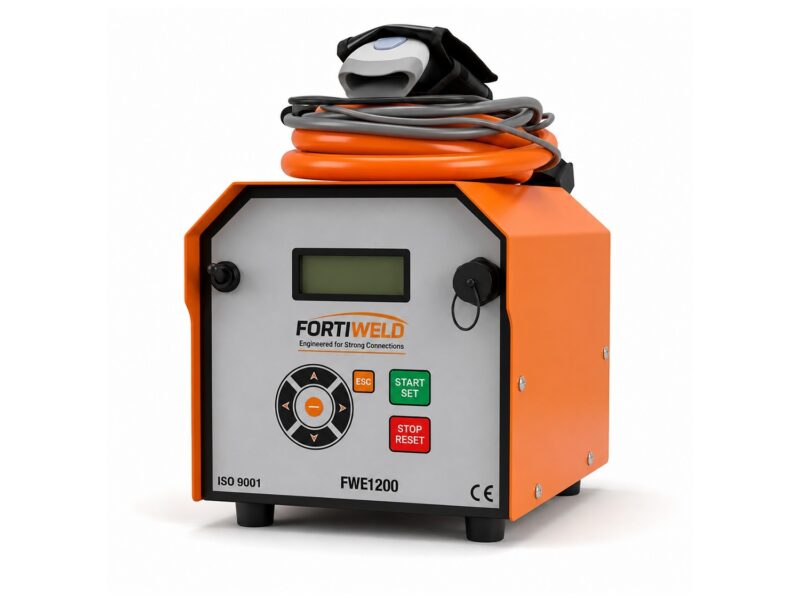
- FWE 1200 — top-segment electrofusion machine for large-diameter infrastructure projects.
The value in the model number is related to the approximate pipe diameter range covered by the machine; the exact diameter range and technical specifications supported by each model are stated on the relevant product page.
How Should You Choose the Right Model?
The determining factor in selection is the diameter range of the pipes you will be working with. If you mainly do small-diameter installation and repair work, compact models such as FWE 200 or FWE 315 are practical and economical. If you work on large-diameter infrastructure lines, high-capacity machines such as FWE 630 or FWE 1200 are required. You should also consider your needs such as barcode reading, weld recording, and power source flexibility. If you are not sure which model is suitable for your work, you can consult the Fortiweld technical team for a proper assessment.
Maintenance and Usage Tips
Reliable welding in electrofusion machines is possible with correct use and regular maintenance:
- Keeping the welding cables and connection ends (terminals) clean, free of oxidation, and secure.
- Ensuring the barcode reader and screen are clean and in working condition.
- Properly scraping and cleaning the pipe surface before every weld; not skipping this step.
- Storing the machine in an environment protected from moisture, dust, and impact; ensuring stable power supply when used with a generator.
These simple yet critical measures increase both welding success and the service life of the machine.
Why Fortiweld?
Fortiweld has a manufacturing approach in HDPE joining technologies that takes real field conditions into account. The FWE series electrofusion machines aim for consistent results with ease of use, reliable parameter management, and durable construction. Its wide model range offers a suitable solution at every scale, from small installation jobs to large infrastructure projects. Proper pre-sales guidance and after-sales technical support are an integral part of Fortiweld's understanding of reliability. When the right machine selection, careful welding preparation, and regular maintenance come together, a solid foundation is created for your pipelines to provide leak-free and trouble-free service for many years.