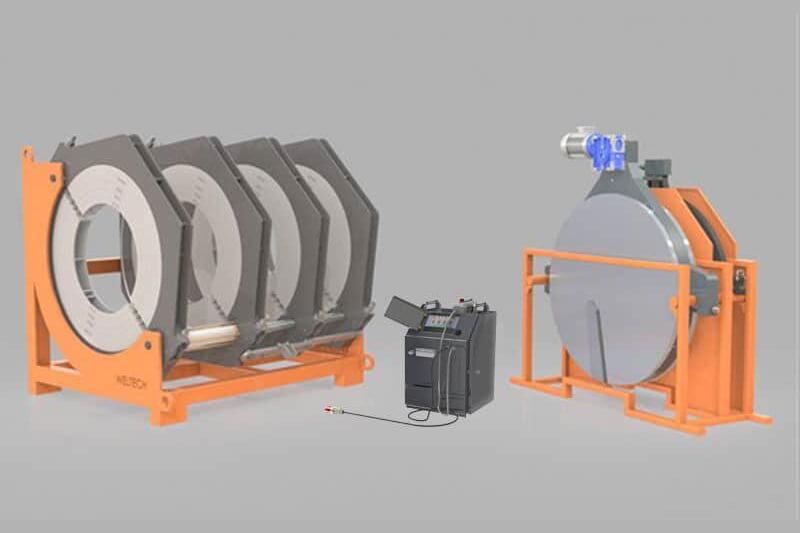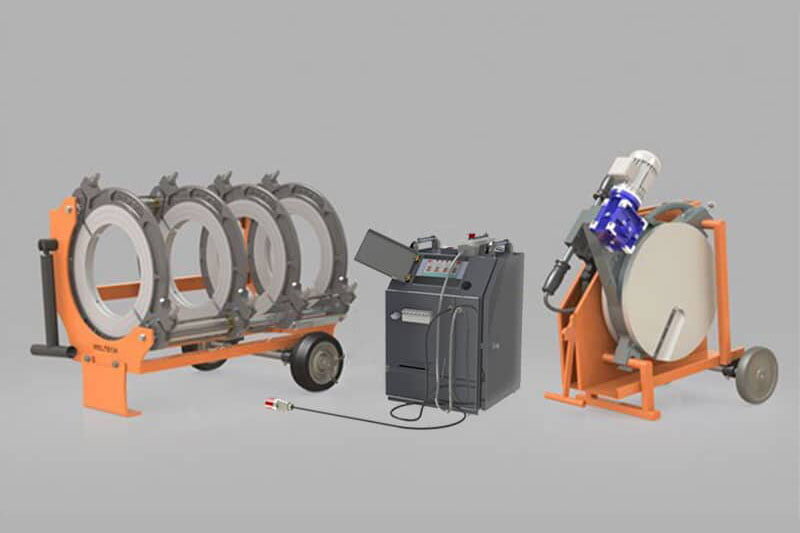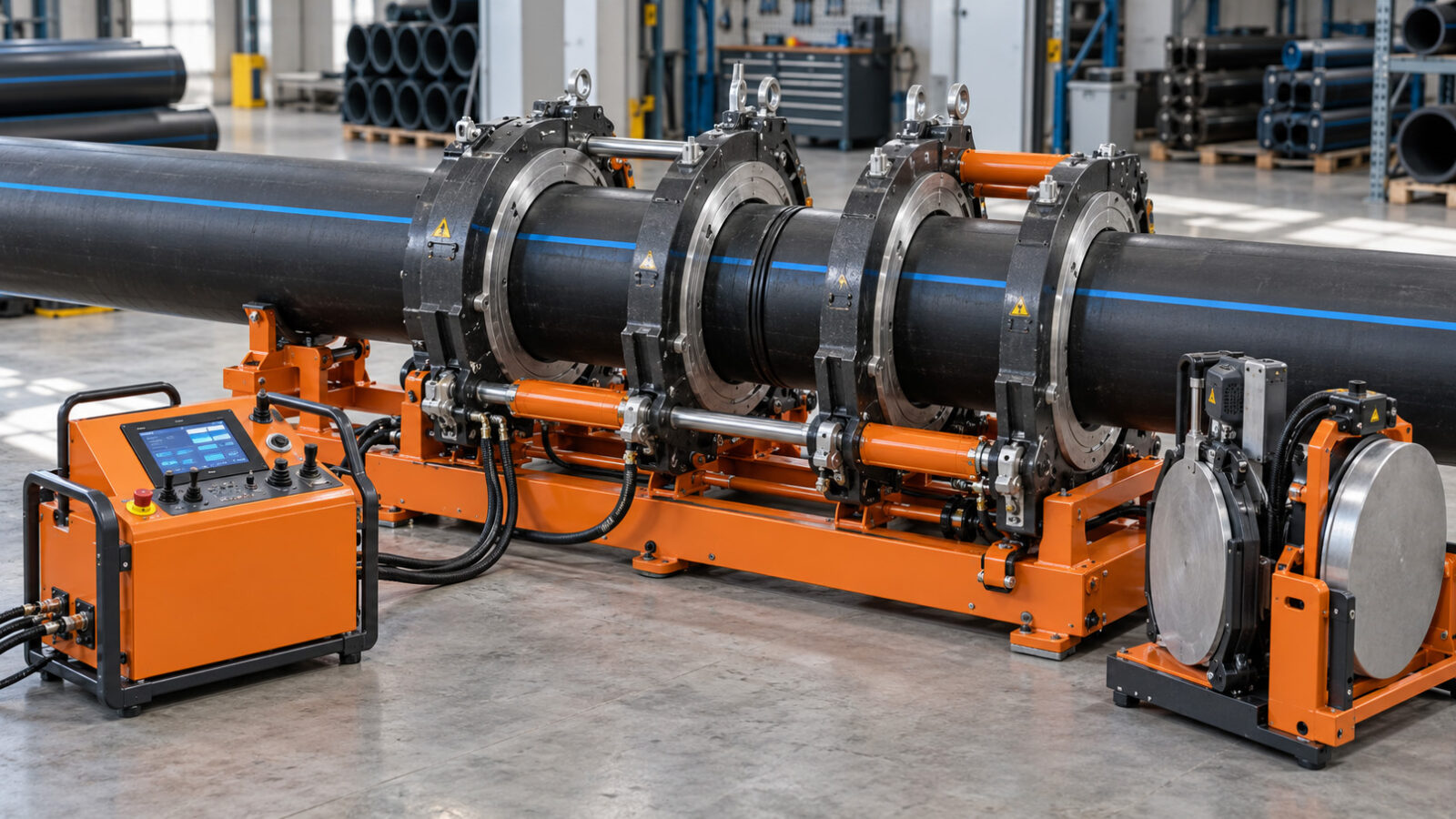
An HDPE CNC welding machine helps contractors control the butt fusion process when joining high-density polyethylene pipes. By automating selected stages of the welding cycle, it can reduce repetitive manual adjustments and support a more consistent workflow.
For buyers, the important question is how well the machine fits the project. Pipe dimensions, the required fusion procedure, site conditions and documentation needs all influence the right choice. This guide explains what CNC control does and what to check before requesting a quotation.
What Is an HDPE CNC Welding Machine?
HDPE CNC welding machine is a butt fusion system with computer-controlled functions. Depending on its configuration, the controller manages stages such as pressure changes and cycle timing, while guiding the operator through the selected procedure.
The term “CNC” does not mean every physical task is automated. Some machines require manual heater removal; others incorporate automatic extraction. Data storage and report export also vary between models, so buyers should confirm exactly which functions are included.
Butt fusion joins prepared pipe ends by heating them and bringing them together under controlled force. The joint then cools under the specified conditions to form a permanent connection.
How Does CNC Butt Fusion Welding Work?
The following overview explains the process; operating parameters must come from the approved fusion procedure and the applicable equipment and pipe instructions.
- Prepare and position the pipes. Secure the pipes in the clamps and support them so they remain aligned.
- Face the ends. A facing tool prepares clean, parallel surfaces.
- Check alignment. Verify that the prepared ends meet correctly before heating.
- Heat the joint surfaces. A temperature-controlled heater brings the pipe ends to the required condition.
- Remove the heater and join. Bring the heated ends together within the procedure’s permitted changeover time.
- Maintain the required force during cooling. Keep the joint supported and undisturbed for the specified period.
- Inspect the completed joint. Follow the project’s inspection and acceptance requirements.
CNC control assists with the programmed cycle, but pipe preparation and operator checks remain essential. Plastics Pipe Institute: HDPE fusion process.
What Benefits Should Buyers Look For?
Consistent Cycle Control
Where the controller manages pressure changes and timing, it reduces the number of manual interventions during those stages. Ask the supplier to demonstrate the complete cycle so your team can see which actions remain the operator’s responsibility.
Clear Operator Guidance
Evaluate the interface during a demonstration. Can the operator clearly identify the selected pipe data, current phase, alarms and next required action? A useful display should make the workflow easy to follow under actual site conditions.
Useful Welding Records
Where logging is available, confirm what the machine records and how the information can be exported. A report that cannot be matched to a specific joint may offer limited value during a project review.
Before ordering, ask for a sample report and check whether it includes the identifiers and process data required by your customer. Do not assume that every CNC machine includes the same reporting features.
How to Choose an HDPE CNC Welding Machine
Match the Pipe Dimensions
Provide the outside diameters and SDR values for the pipes you intend to weld. SDR describes the relationship between outside diameter and wall thickness; diameter alone does not fully describe the application.
Also identify any fittings or flange adapters involved. Ask the supplier to confirm the necessary inserts, clamping arrangement and working space for the complete joint configuration.
Confirm Procedure Compatibility
Tell the supplier which fusion procedure your project requires. Request written confirmation that the proposed equipment and controller configuration support it.
Avoid choosing equipment solely because its description mentions “international standards.” Ask which specific procedures are supported, how they are selected and what documentation accompanies the machine.
Define the Required Automation
Specify what you expect the equipment to do automatically. Heater removal, carriage movement, pressure control and data recording should each be discussed separately.
This makes quotations easier to compare and helps prevent a mismatch between the purchasing team’s expectations and the equipment delivered.
Check Power and Site Requirements
Provide the destination country, available voltage and phase, and whether the machine will run from a generator. Ask the supplier to specify the required electrical supply and generator capacity for the proposed configuration.
Also consider transport access, lifting equipment, pipe handling space and storage. A suitable welding machine still needs a practical working area.
Evaluate Support and Ownership Costs
Compare complete packages. Request details of included inserts, accessories, commissioning, operator training, maintenance requirements and spare parts availability.
A lower purchase price may become less attractive if essential accessories are excluded or service arrangements are unclear.
CNC Butt Fusion and Electrofusion: Which Equipment Do You Need?
Before comparing quotations, confirm the joining method specified for the project. CNC butt fusion equipment and electrofusion equipment serve different joining arrangements.
If the project calls for butt fusion, define the pipe dimensions, joint configurations and required cycle controls. If it calls for electrofusion fittings, request equipment intended for those fittings and their approved procedures.
For projects involving both methods, prepare separate equipment requirements. This helps suppliers quote the appropriate systems and accessories without treating different machine categories as interchangeable.
Why Correct Pressure and Cooling Matter
A hydraulic machine’s gauge pressure is not the same as the pressure at the pipe interface. The required gauge setting depends on factors including pipe dimensions, the machine’s effective piston area and drag.
Cooling is also part of the joining process. The joint must remain under the prescribed conditions long enough to develop the required strength before release and handling. Follow the selected procedure rather than copying settings from another machine or pipe size. Plastics Pipe Institute: joining force and cooling.
Request an HDPE CNC Welding Machine Quotation from Fortiweld
A useful quotation starts with clear project information. When contacting Fortiweld, provide:
- Pipe outside diameters, SDR values and material specifications.
- Fitting types and joint configurations.
- Required fusion procedure and documentation.
- Desired automation and reporting functions.
- Available power supply and site conditions.
- Destination country, accessories and delivery requirements.
Use these details to request a proposed configuration and confirm its technical scope before ordering.
Planning your next pipe fusion project? Visit Fortiweld to discuss your HDPE CNC welding machine requirements and request a quotation.
Frequently Asked Questions
1. Is an HDPE CNC welding machine fully automatic?
Not necessarily. Automation varies by model and configuration. Confirm whether heater removal and other physical operations are manual or automatic, and ask which welding stages the controller manages.
2. Does CNC control remove the need for a trained operator?
No. The operator still needs to prepare the pipes, check the setup, select the correct procedure and follow inspection requirements. Automation assists with defined tasks within that process.
3. Can pipes with different wall thicknesses be butt fused?
This requires specific assessment. Joining pipes with different DR or SDR designations is subject to limitations and should be reviewed with the pipe manufacturer and project engineer. Plastics Pipe Institute: butt fusion compatibility.
4. What determines the price of an HDPE CNC welding machine?
Request a quotation based on diameter range, automation, reporting functions, accessories and support. Compare the full supplied package and delivery scope to understand what each price includes.
5. What information should I send to Fortiweld?
Start with pipe diameter, SDR, material, required fusion procedure, power supply and delivery location. Add your expectations for automation, welding records, fittings and accessories so the proposed configuration can be assessed against your project.