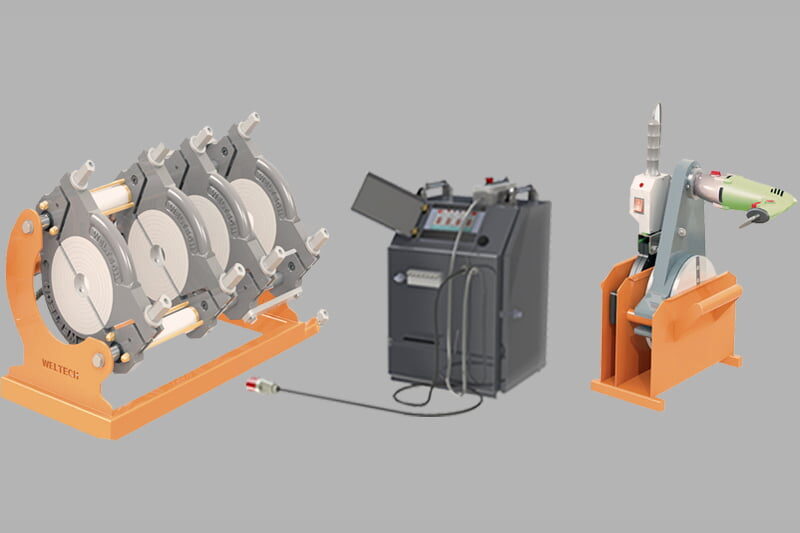
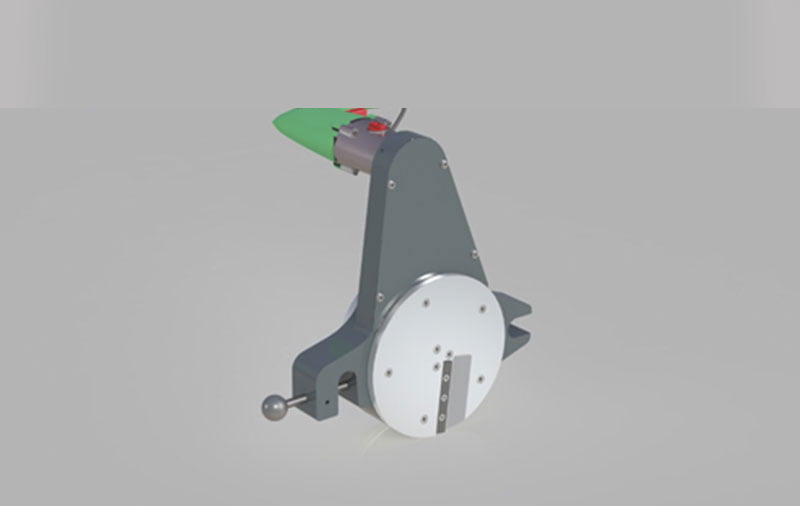
In HDPE pipelines, electrofusion welding The choice between butt fusion welding methods is a technical decision that directly affects the success of the project. Both methods can produce high-strength, leak-proof joints; however, operating conditions, pipe diameter, space constraints, and project requirements play a decisive role in this choice. Choosing the wrong method can lead to both loss of efficiency in the field and problems that threaten the long-term reliability of the pipeline.
What Is the Main Difference Between the Two Methods?
The butt fusion welding method joins two pipe ends directly by melting them between a heated plate; no additional parts are used, and the pipes are fused end-to-end. This achieves uniform geometry and minimal material variation along the line. The electrofusion method, on the other hand, works through a special connection part (fitting) with embedded resistance wire: the fitting placed on the pipe end is heated through an electrical cycle programmed by the welding machine, melting both its inner surface and the outer surface of the pipe, providing a strong fusion in a short time.
This fundamental difference clearly separates the use cases of the two methods. To make the right choice, project-specific criteria must be evaluated one by one and engineering requirements must be taken into account.
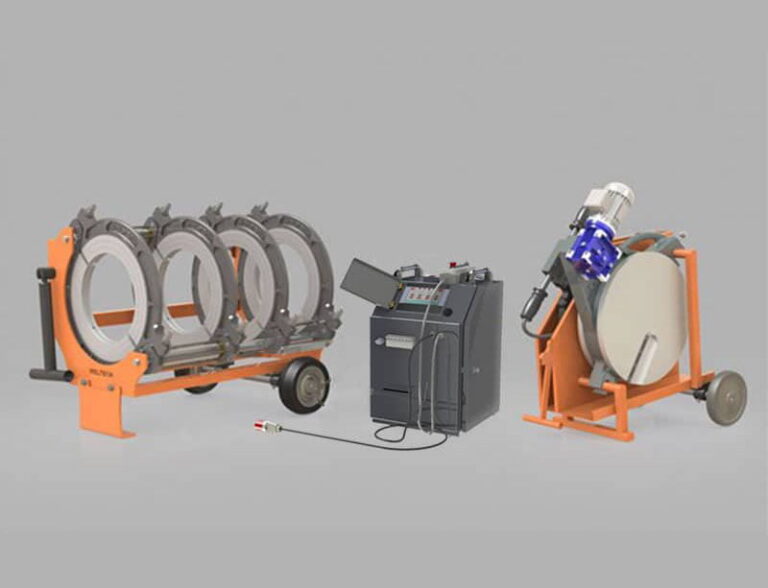
Which One Is Preferred in Which Situation?
Pipe Diameter and Sizing
Butt fusion is the most efficient method for large-diameter pipelines; it offers a strong and continuous joint at large diameters without the cost of additional parts. The leverage and pressure power of butt fusion machines create a clear advantage at these scales. Electrofusion, on the other hand, provides notable practicality at small and medium diameters; the fitting geometry and the short welding cycle add operational speed at these scales. For specific diameter limits, the pipe manufacturer's recommendations and relevant standards should be consulted; each project has its own calculations.
Space and Access Constraints
Butt fusion machines require sufficient working space and axial maneuvering distance to press the pipe ends against the plate. In confined areas such as narrow trenches, closed galleries, basements, or tunnels, providing this distance may not always be possible. The physical dimensions of the electrofusion machine are much smaller; only the fitting, pipe end, and welding machine terminals are sufficient. Therefore, electrofusion stands out in every situation where physical constraints are decisive.
Pipeline Repair and Connection Points
If localized repair is to be performed on an existing pipeline, electrofusion is almost the only practical option; butt fusion requires both sides to be free and fully axially aligned, which is difficult in the middle of a long line. At branch points, T connections, reducer transitions, and sleeve insertion operations, the variety of electrofusion fittings provides a decisive advantage. As the need for flexibility in the field increases, the value of electrofusion increases.
Welding Time and Field Efficiency
Butt fusion requires a certain amount of time for the heating-pressure-cooling cycle to be completed correctly; however, after this period, the pipeline progresses without additional parts and uninterrupted. This feature creates a time and cost advantage on linear lines. The electrofusion welding cycle varies according to the fitting size, and there is a material cost per fitting; on the other hand, the installation speed clearly highlights electrofusion in narrow spaces and complex line geometries. When comparing the two methods, it is necessary to calculate not only the machine hours but also the total installation cost.
Certification, Traceability, and Official Projects
Both methods may require certified operators and auditable welding data depending on the application. Modern electrofusion machines read the fitting barcode to automatically program the welding cycle and generate data records; butt fusion machines, on the other hand, perform reporting by storing parameter records in real time. For official public infrastructure projects, this traceability requirement should be prioritized in both methods. Negligence in certification and documentation can cause hundreds of welding points on a large line to be queried one by one and delay the project's acceptance.
Selection Guide: Which Criterion Should You Evaluate First?
- Large diameter, open area, long linear route: Butt welding is advantageous in terms of both cost and efficiency; no fittings are required, and the geometry is uniform.
- Small-medium diameter, narrow space, gallery, tunnel, basement: Electrofusion is the priority choice; its compact structure and fast cycle provide flexibility on-site.
- Repair, localized joining, in-line addition: Electrofusion is practically mandatory; the free space required for butt welding is often unavailable.
- T-connection, reduction, sleeve transition: The variety of electrofusion fittings is decisive at all of these points.
- Mixed line geometry: Applying the two methods together is often the most efficient solution; butt welding on the linear route, electrofusion at connection and junction points.
- Budget and material cost: On large-scale lines, butt welding eliminates the cost of additional fittings; on smaller scales, fitting costs can remain within an acceptable range.
- Long-term maintenance ease: In both methods, the localization and documentation of the weld accelerates any future repair or expansion work; therefore, traceability infrastructure should also be considered when making the choice.
Frequently Asked Questions
What is the main difference between electrofusion and butt fusion welding?
Butt welding directly melts and joins two pipe ends via a heated plate; no fittings are used. Electrofusion, on the other hand, works through a special fitting with an embedded resistance wire and provides fusion by melting both the outer surface of the pipe and the inner surface of the fitting together. The choice of method varies according to diameter, area, and connection type.
Which method is more suitable in narrow spaces and trenches?
Electrofusion is preferred in restricted working areas such as narrow trenches, enclosed galleries, or tunnels. Butt welding machines require a wider maneuvering area to align and press the pipe ends; this space may not be available in confined areas.
Which method is used for localized repair on an existing pipeline?
Electrofusion is practically mandatory for localized repair and joining operations in the middle of a pipeline. For butt welding, both sides must be free and fully axially aligned; this condition is usually not met in the middle of a long line.
Can both methods be used together in the same project?
Yes. In large-scale or geometrically complex projects, both methods can be applied together. By using butt welding on the main route of the line and electrofusion at branch points and in restricted areas, both cost and application efficiency are optimized.
Is a certified operator required for electrofusion welding?
In official public infrastructure and construction projects, electrofusion welding operators are required to have received training in accordance with the relevant standards. We recommend that you verify the certification requirement by reviewing the project specifications and applicable standards.
The Right Machine for the Right Method
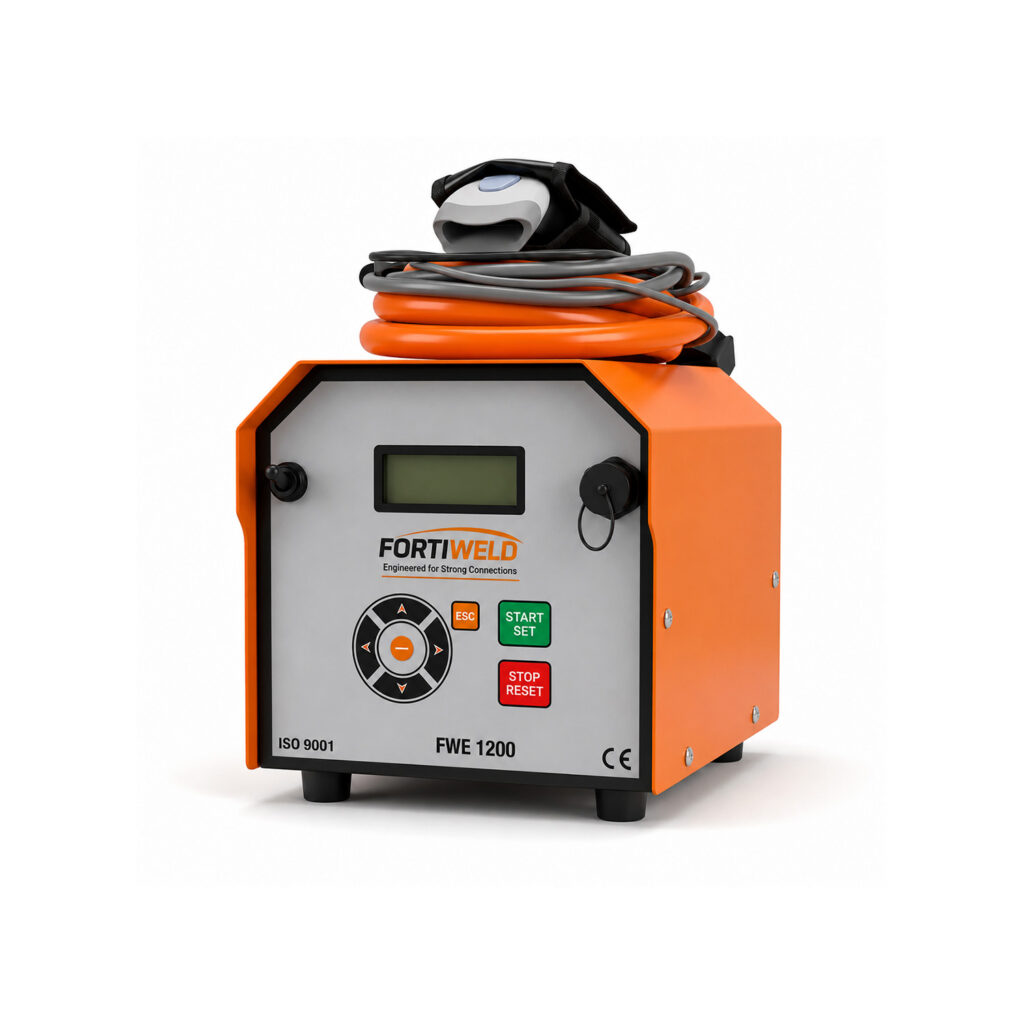
The quality of the results of both methods is directly dependent on the technical capacity and reliability of the machine used. Fortiweld Electrofusion Welding Machines, maximizes field reliability with automatic welding cycle programming, fitting barcode reading, and digital data recording. As the line scale grows, Fortiweld Hydraulic Butt Welding Machines series comes into play; its power-controlled hydraulic system provides consistent and repeatable pressure application even on large-diameter pipes. Both machine series offer reliable performance over long project cycles with their structures durable to field conditions.
If you are not sure which method to choose or if your project requires the combined use of both methods, contact the Fortiweld technical team. Our experts will recommend the most suitable equipment combination by evaluating line diameter, ground conditions, connection geometry, and project schedule together. Determining the right method from the start eliminates from the outset the risks of rework and additional costs that may occur in the field.